Tuesday, September 11, 2012

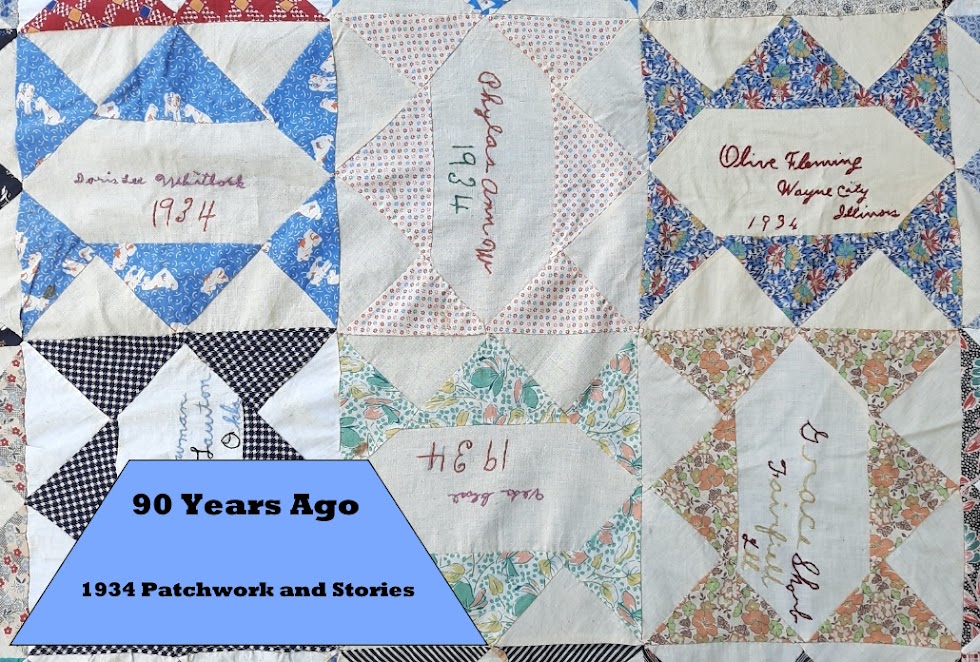
The Autograph Age

Do you remember when Laura Ingalls received her autograph album?


Pa and Ma had taken Mary to the college for the blind and left Laura, Carrie and Grace on their own for a week.  Laura was 14 and Carrie was 10, Grace was even younger.  Not something we would do today.  Laura decided to do the fall house cleaning and the week was spent washing, scrubbing and blacking the stove.  When the elder Ingalls returned there were presents for the girls.
In Laura's package was a beautiful small book, too.  It was thin, and wider than it was tall.  On its red cover, embossed in gold, were the words, 'Autograph Album'.  The pages, of different soft colours, were blank.  Carrie had another exactly like it, except that the cover of hers was blue and gold.
'I found that autograph albums are all the fashion nowadays,' said Ma. 'All the most fashionable girls in Vinton have them.'
'What are they, exactly?' Laura asked.
'You ask a friend to write a verse on one of the blank pages and sign her name to it,' Ma explained.  'If she has an autograph album, you do the same for her, and you keep the albums to remember each other by.'
Ma signs Laura's book a few chapters later.


Autograph albums were indeed all the range in the 19th century.  Their heyday was from 1830 to 1850.  Signature quilts are a phenomena of this period too.  One important development was the invention of permanent ink in 1845; signatures written 150 years ago are still legible today.

The role of women changed through the nineteenth century as a rural farming lifestyle was overtaken by an urban industrial society.  Men went to work in the 'public' world;  women stayed at home in the 'private' world of family.  Women turned to each other for friendship and support, and their signature quilts recorded family relationships and rites of passage.

Sources: Little Town on the Prairie by Laura Ingalls Wilder; The Signature Quilt by Pepper Cory and Susan McKelvey

Thursday, September 6, 2012

Visit to Wonga Park

We had a lovely time last week.  The Chester County Criswell Quilt, code name CCCQ, was invited to Warrandyte to visit some antique quilt lovers, and I went along as its minder.


Seriously,  Bev had contacted me to organise a showing of the quilt and Linda's home was chosen as the venue.  It was pretty brave of Linda and Bev; they didn't know me, they hadn't seen the quilt, and they invited another 30 ladies to come as well.  Fortunately everyone had a ball.


CCCQ was stretched out for a close inspection.


Then it was hoisted up for a photo shoot. I've never seen it looking so good.


We got to meet some of the early achievers.  If there was a race to the finish Miriam would be the winner.

The day was great.  CCCQ didn't want to come home,  it was very happy to be the centre of attention.  Thank you Bev for your organising, thank you Linda for your hospitality, and thanks to everyone that came out for a bit of show and tell.

Sunday, September 2, 2012

Housekeeping

The response to Elizabeth Cowan's block and the First Year Set has been remarkable.  I wish I could say everything was running perfectly, but we are talking about computers after all.

Update:  The website has had an upgrade.  Everything is working smoothly, there will be no more problems from the computer (and the pigs are getting ready to fly!)


So, a few notices:
Thank you to Lynne who pointed out that I was recommending a 1.5 inch turnunder for the applique, not 1/4 inch.
I fixed the 1/4 inch, reloaded the files, and put them in the wrong folder on the website.  Thank you to Adele who discovered she couldn't download her pattern but stayed very polite and calm while I got the right pattern into the right folder.
A message to Phyllis L. of Fayetteville - your email is bouncing, I need you to get in touch so I can send your pattern.

Payments:  I hate to say it, but PayPal is working perfectly and is giving no trouble at all.  I am recommending PayPal as the easiest way to make your payment.
A few people have had trouble with their credit card payment.  If you receive an error message as you finish your order, don't pay again, just wait and the payment will be processed.  I have contacted PayMate to find out what the issues are.
If you are in Australia you don't have to pay online.  You can print the order form which includes my bank details.  Then you can pay with real money at any Commonwealth Bank.

If I am at the computer when your order comes in, I can send the link to the pattern straight away.  If I am at work or sound asleep you will have to wait a while until I get back to the keyboard.  I check the computer several times a day (or more) so you won't have to wait very long.

The link will come as an email headed Downloads Access.  You get three tries to download the link.  If you have trouble with the download and use up the three tries you need let me know and I will reset the link.

This stuff is boring, isn't it?  I promise that the next post will be much more entertaining.

Friday, August 31, 2012

Block 2 Elizabeth Cowan


I am so pleased to present Elizabeth Cowan's block from the Chester Criswell Quilt.  Elizabeth used green for the centre and red for the four elements; I reversed the colours. 
The pattern is now on the Two Bits Patches website.  You can choose just Block 2 or you can choose to purchase The First Year set and automatically receive a new pattern at the start of each month.


The quilt and I were invited to Wonga Park to give a bit of a show.  We had an excellent day, you can read all about it at Linda's Quilts in the Barn.

Monday, August 27, 2012

Godey's Lady's Book


The Godey's Lady's Book was a monthly magazine published in Philadelphia between 1830 and 1878.  Before the American Civil War it was the most widely circulated magazine in the United States.  The editor from 1837 to 1877 was Sarah Josepha Hale.  She also wrote "Mary Had a Little Lamb".
Godey's Lady's Book was best known for the fashion plates and patterns which became a useful source for women across the continent.  The magazine also published short stories, information about women's causes and employment, and sheet music; it never discussed political subjects.


So, I thought I would see if any Godey's Lady's Books were still in existence.  I found one on eBay from 1853 but the seller wouldn't ship overseas.  I can get a download on my Kindle... but I don't own a Kindle.  Then I just Googled 'Godey's Lady's Book' and found that there are free digitised copies for study purposes everywhere.  I started at http://onlinebooks.library.upenn.edu/webbin/serial?id=godeylady , but there at other sites as well.

The plate above is titled 'Taking Tea in the Arbor'  from January-June 1852 collection.  Mary Criswell was engaged in March 1852.  I wonder if she and her sisters and her mother studied this very picture to get ideas for her wedding dress?

Isn't the internet amazing?!

Friday, August 24, 2012

From the Library - What's in a Name

One of my newer books in my small yet rapidly growing collection is from the International Quilt Study Centre & Museum at Lincoln , Nebraska.  It is called "What's in a Name?: Inscribed Quilts" by Carolyn Ducey & Jonathan Gregory.  Ducey is the Curator of Collections and Gregory is the Assistant Curator of Collections at the museum.
This book is a catalogue of an exhibition at the museum of nineteenth-century quilts.  This is one of my favourites in the collection.


This quilt was made in 1845 in Baltimore, Maryland and records the members of the Hargest family. The family history surrounding the quilt has been complied by a descendant of the family.

Red and green are always a winning combination, but I expecially like the geometric sashing between the blocks. There are a variety of red prints but the same print is used for each block.  I wonder if the red diamonds and squares are pieced or appliqued?

Friday, August 17, 2012

Family History and Quiltmaking

About fifteen years ago my Australian husband began his family tree.  He started, like we all do, with information from parents and grandparents.  Then off to the library for hours spent in the microfiche index records finding names, dates and places.  Once the right index was found, it was down to the mailbox to post a cheque to the Births, Deaths and Marriages.  A few weeks later a little slip of paper would arrive and, hey presto, a few more bits of information were added to the family tree.
We gave him a software program to transfer all his little bits of paper safely into the computer.  Then we changed computers and everything disappeared.  That was the end of that family history adventure.

Researching the makers of the Criswell quilt is similar to family tree research.  Ancestry.com is certainly my first port of call, especially as I live in Australia and the records are all in the USA.  The big difference is that I already know all the names; I just don't know how they relate to each other and to Mary McClelland Criswell.

I have made an online family tree called the Criswell Quilt Tree.  It not really one tree but more of a grove of saplings.  My starting place is the 1850 Federal Census records for Chester County; the quilt was made in 1852 and farming families didn't move around a lot.  There are about 80 signatures on the quilt and I have recorded about 400 individuals in the Quilt Tree.  I know something about a majority of the people on the quilt although some are reluctant to be verified.

Let me tell you about my latest 'win' in the family history game.  I was looking for that most elusive family name - Smith.  If you have a Smith in your family tree, you know how difficult it is to find your Smith and not everyone else's Smith.

James R and Nancy C Smith

This block is signed by James R Smith and Nancy C Smith, East Nottingham.  From the 1850 census I know that they have two little children.  In the 1860 census there are more people in the family; but when I looked at the original census page the image is too light to read.  I send a note to Ancestry.com that it was illegible and then went on with something else.
That was a few months ago.  I decided to have another look at the Smiths the other evening, went to the census page and ... the original has been rescanned and is now clear as day!  This is what I found:


James R and Nancy Smith still married and farming.  Mary and William are ten years older, and in addition there are Jane, Elizabeth and Alice.  But wait, there's more!  Dorcas Smith aged 60 and Jahn Carlisle aged 73 are also family members.
Many families in these records are multi-generational.  I take a small leap of faith here and assume that Dorcas Smith is James' mother and John Carlisle is Nancy's family. Nancy's middle initial C probably stands for Carlisle.   Dorcas Smith is a new person so I add her to the tree.  Carlisle/Carlile is a common name on the quilt - Mary McClelland Criswell's mother was a Carlile - so I look to see if I have a John Carlile of the right age.  Bingo!  John Carlile is in the tree, in 1850 he was living with his wife Mary and son James Taylor Carlile - who also has a block in the quilt.


James Taylor Carlile, Elk Dale
 That makes Nancy Smith and James Carlile sister and brother, another link is made, and my family quilt tree grows another notch.

(I made some more Smith discoveries, but I'll save them for another time.)

Wednesday, August 15, 2012

Photos of Jane Wilson's Block


Jane Wilson's Block

My Block

This is the place for your photo of the first block.  If you don't have a blog you can send me a photo and I'll post it on your behalf.

Francoise's Block

Kirsten's Block


Wendy's Block


Instructions for Linking Up Your Blog:

1. Write your blog post. Publish it on your blog.

2. Copy the link of the specific blog post. This is not just the link to your blog itself (www.chestercriswellquilt.blogspot.com), but the link to the specific post:
(http://chestercriswellquilt.blogspot.com.au/2012/08/hows-it-going.html)

3. Click the blue link up button above and paste your link into the box.

Monday, August 13, 2012

How's it Going?

I know that some of you are already working on your first block and may even be waiting for the next one. 


 Those cutout sections in my block are a little lopsided.  I found going around the first side of the trident shape pulls the fabric towards.  So the left hand 'arm' is pulled towards the outside of the block and the right hand 'arm' is pulled towards the inside. 


Jane's block is does the same, so I know that she's also right handed.  If she was left handed the shapes would pull the other way. 

Do you have a picture of your block yet?  More importantly, are you happy with it?  You only have to please yourself, you know.  I hope to get a little gallery of everyone's blocks.  You can send a jpeg file as an attachment to my email address - click on View my complete profile listed under my smiling photo.  I can post your photo anonymously or with your name or with a link to your blog.

My current block is proving to be a bit of a challenge.  This is my second attempt.


One flower shape done....and three to go.

Saturday, August 11, 2012

Fabric Requirements

If you are making the whole quilt you may want to buy all of your background fabric first.  The finished quilt is square, 6 x 6 blocks and each block is finished at 12 inches.  If you make the larger central block the finished size is still the same;  the large block replaces the 4 centre blocks.
The standard width of cotton fabric is 44 inches : 112cm.  You can cut 3 - 14 inch backing squares across the width of the fabric.  I cut my fabric in 14 inch lengths and cross cut 3 squares.  That makes a block bigger than you need, but if your applique is off centre than you can square it up before the blocks are assembled.
You need 12 widths for 36 blocks.  Cutting at 14 inches requires 168 inches : 4  2/3 yards : 4.3 metres.  Cutting at 13 inches requires 156 inches : 4 1/3 yards : 4 metres*

* That doesn't leave any room for error - better get 4.5 yards or 4.2 metres *


This is my first reproduction quilt so my stash isn't very big (yet).  I always wash my fabrics; many quilters don't.  I have used white quilters' muslin for my background (quilters' calico in the USA).  I want my finished quilt to look as if it was new so I'm using white and strong reds and greens.  You may want an aged look and use off-white with soft greens and pinks. 
You don't have to use one fabric for all of the background.  You may choose to use a selection of shirting prints and make the appliques in blues and reds and browns.  You may dig into your stash and use whatever you have on hand.  You may only make a nine block lap quilt with pieced sashing; just over a yard of background fabric would be enough.

Wednesday, August 8, 2012

Farmers' Daughters, Farmers' Wives

I get a lot of comments about the workmanship of the original quilt and the obvious talent of the maker.  I certainly will never match the tiny even stitches in the piecing and the quilting.  Without detracting from the overall quality of the sewing, the makers of the quilt were using everyday skills that all women used in the USA in the 1850s.  Sewing by hand was the only option; the sewing machine wasn't affordable for the average household until the 1870s.

The women who made the quilt weren't professional seamstresses.  I can state pretty confidently that each one of them was a farmer's daughter.  Many became farmers' wives, some were farmers' maiden aunts or farmers' mothers.  A few became schoolteachers, one of the few professions available to women in the 1800s.  One became a medical doctor.
For the women of Chester County, sewing wasn't a hobby, it was an essential skill for everyday living.  Education for girls in the 1850s included learning and polishing sewing skills.  Sewing taught neatness, accuracy, careful planning and patience; it was practical as well as creative.  It was an essential part of the school curriculum along with English, reading, spelling and arithmetic. (Source; 'Patches of Time' by Linda Haplin)

The quilt blocks in the Chester Criswell quilt reflect similar sewing abilities.  There is one exception.


Block made by Martha of Oak Grove, Sadsburyville


The fabric is badly damaged, but those little 'spokes' of the wheels are turned under and stitched along each side.  The big circle is like a gear wheel with regular little teeth all the way around.  I don't think I will be drafting a pattern for this block, I hope someone else can show how it was created.

Yes, there are men's names on the quilt too.  My hypothesis is that the men didn't actually make quilt blocks themselves, but signed a block made by their wife or mother.  I would love to be proved wrong.

Monday, August 6, 2012

Guidelines not Rules


Rawson Village
The first weekend in August is the date of my patchwork group's annual retreat.  It's only a weekend, but uninterrupted sewing time, lovely meals appearing like magic and no dishes to wash is a recipe for success.
It's always interesting how each of us approach our craft.  As a fan of Bonnie Hunter's scrap quilts I was surprised to hear another quilter say, "I never keep leftover scraps, you can't do anything with them."  That lead to a lively discussion, and for the rest of the weekend I was given tiny squares from everyone for my "collection".  We all make quilts but we work in many different ways.

There is a lot of buzz around the first block of the Chester Criswell Quilt.  You may be thinking, do I want to make this quilt?  How much fabric do I need?  Where's the photo of the finished quilt? If you're like me,  you have so many projects on the go that you don't need another, and yet the lure of something new is irresistible.

Let me help you decide.

If you want to read the blog, look at the patterns, and say, Oh that's nice, without making any purchase or stitching a block;  that's fine.

If you want a quick project for a weekend treat and download one block as a quick take along project; that's fine.

If you want a gift for a special friend and download four patterns to go with a selection of fat quarters; that's fine too.

If you make all 36 blocks in your choice of colours for a whole quilt and send along photos of your Work in Progress; that's great.

However....

If you like to know exactly what the end result will look like before you begin, with detailed instructions and photos on how to accomplish the finished project, then maybe this isn't the quilt for you. If you don't start mystery quilts until you can read all the instructions, you probably won't enjoy this journey. And that's fine too.

In Pirates of the Caribbean, Barbossa says the pirate code is more what you'd call "guidelines" than actual rules.  I think that's not a bad description for the Chester Criswell Quilt project.

Welcome aboard.